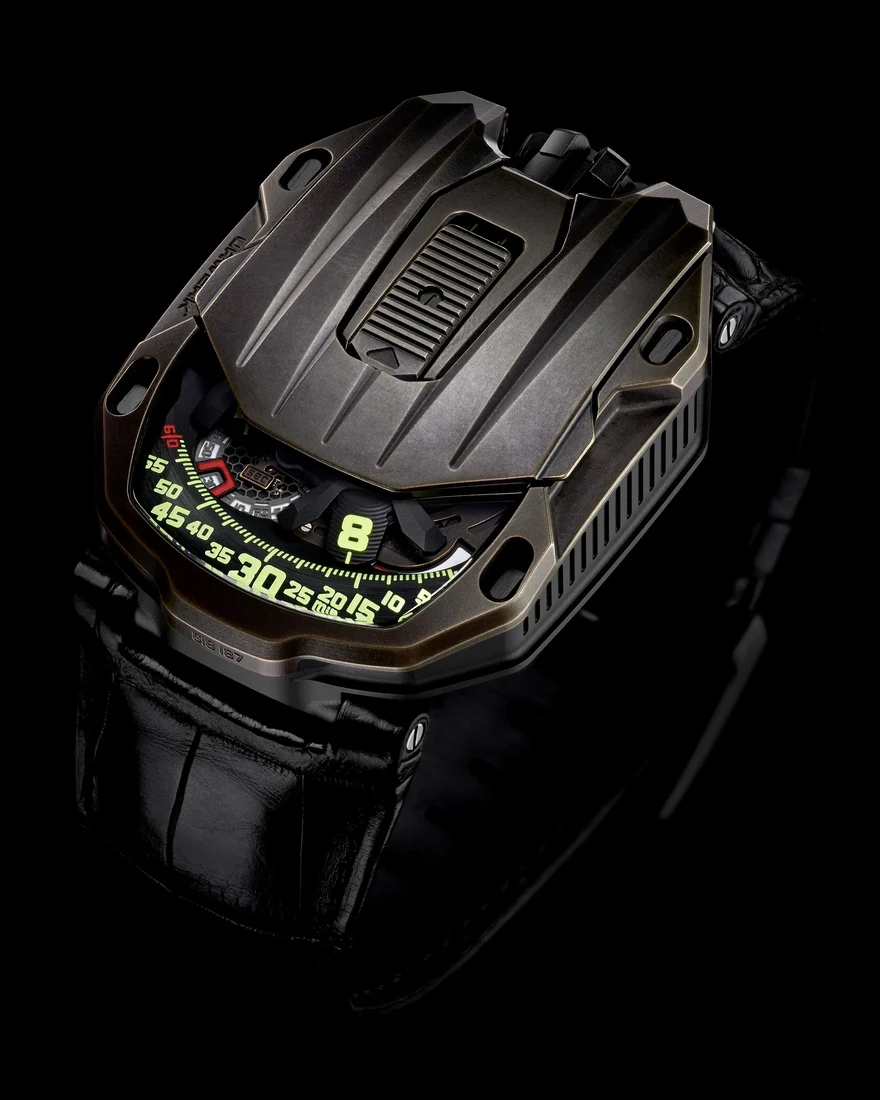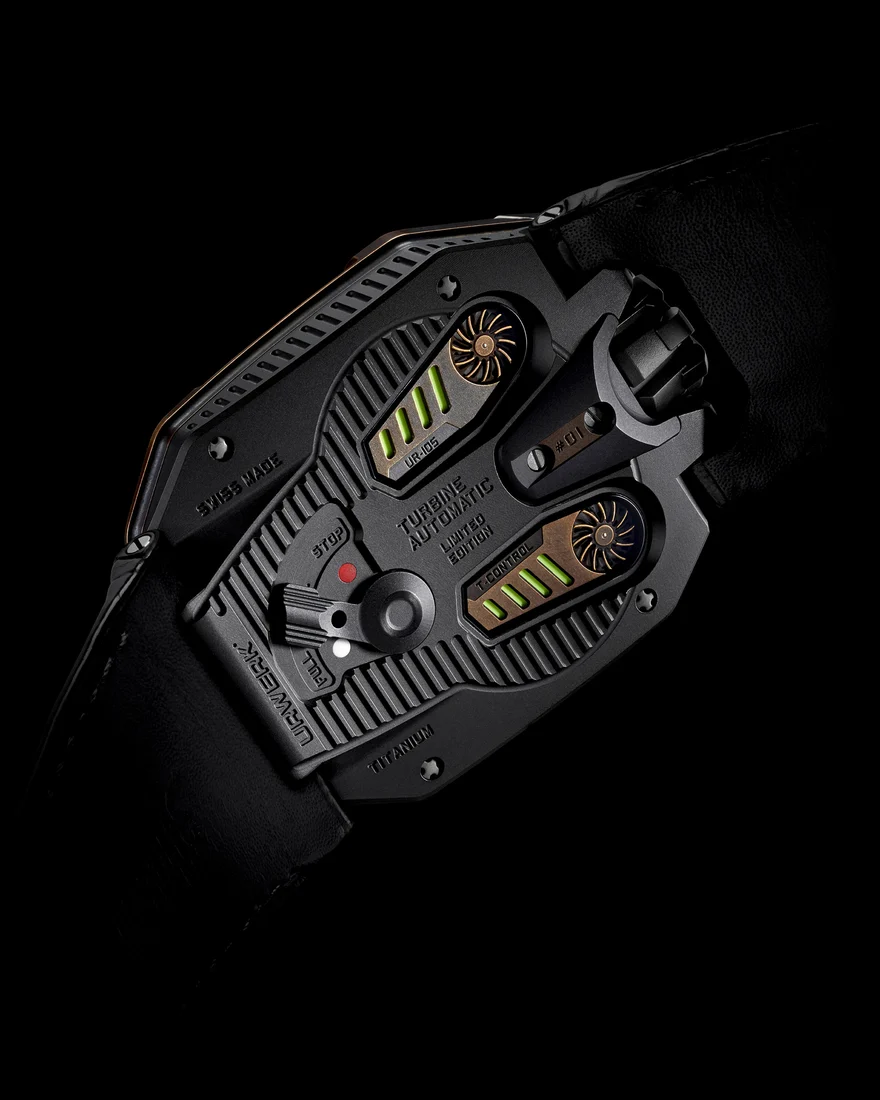
The glowing display of an Urwerk UR-105 CT Kryptonite in the dark, close up

Urwerk

Felix Baumgartner, his brother Thomas, and the designer Martin Frei founded Urwerk in Geneva in 1997. Urwerk sums up its approach in its motto: “We break, then reconstruct the rules of watchmaking.” The movements are fascinating and have turned heads at many international watch shows. Instead of rotating hands, its satellite hours wander across the dial on a carousel, often disappearing and reappearing in an instant. Felix Baumgartner is a member of the Académie Horlogère des Créateurs Indépendants (AHCI).

I can source any watch, new or used, even very hard-to-get. I chose these examples to guide you.

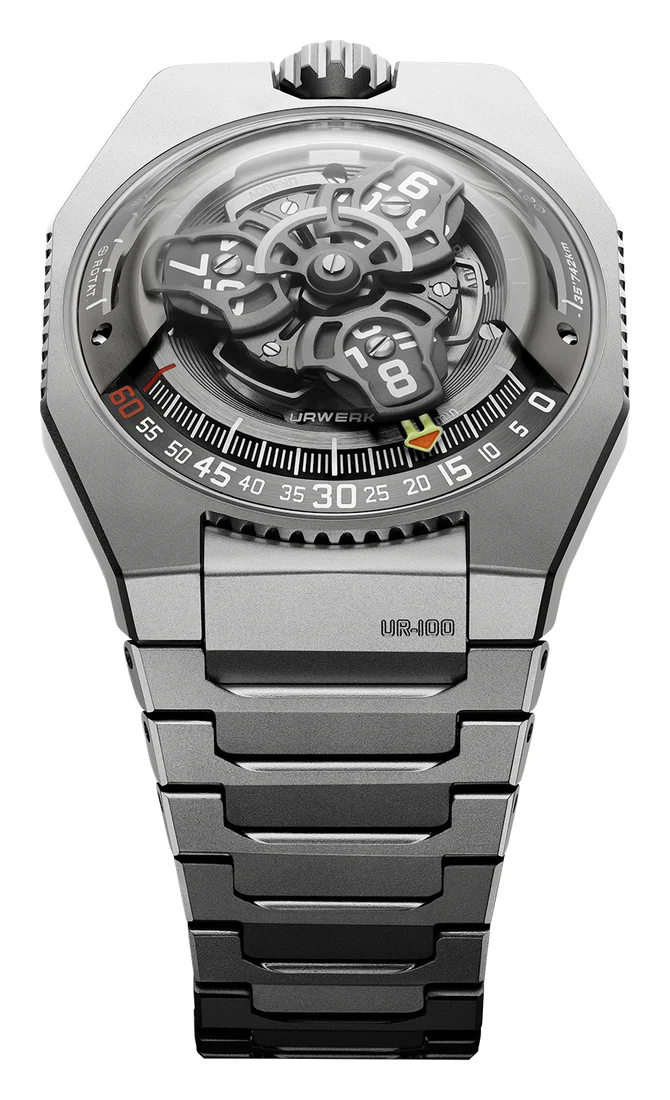
UR-100V Magic T, front

UR-Satellite · 41 × 49.7mm · Automatic

UR-100V Magic T

About $66,000 at launch in 2023

Three satellites on a carousel carry the hours, and one small pointer marks the minutes. The upper corners show how far the Earth turns on its axis and travels around the Sun in 20 minutes. A small airscrew on top of the rotor slows its spin and controls the winding.
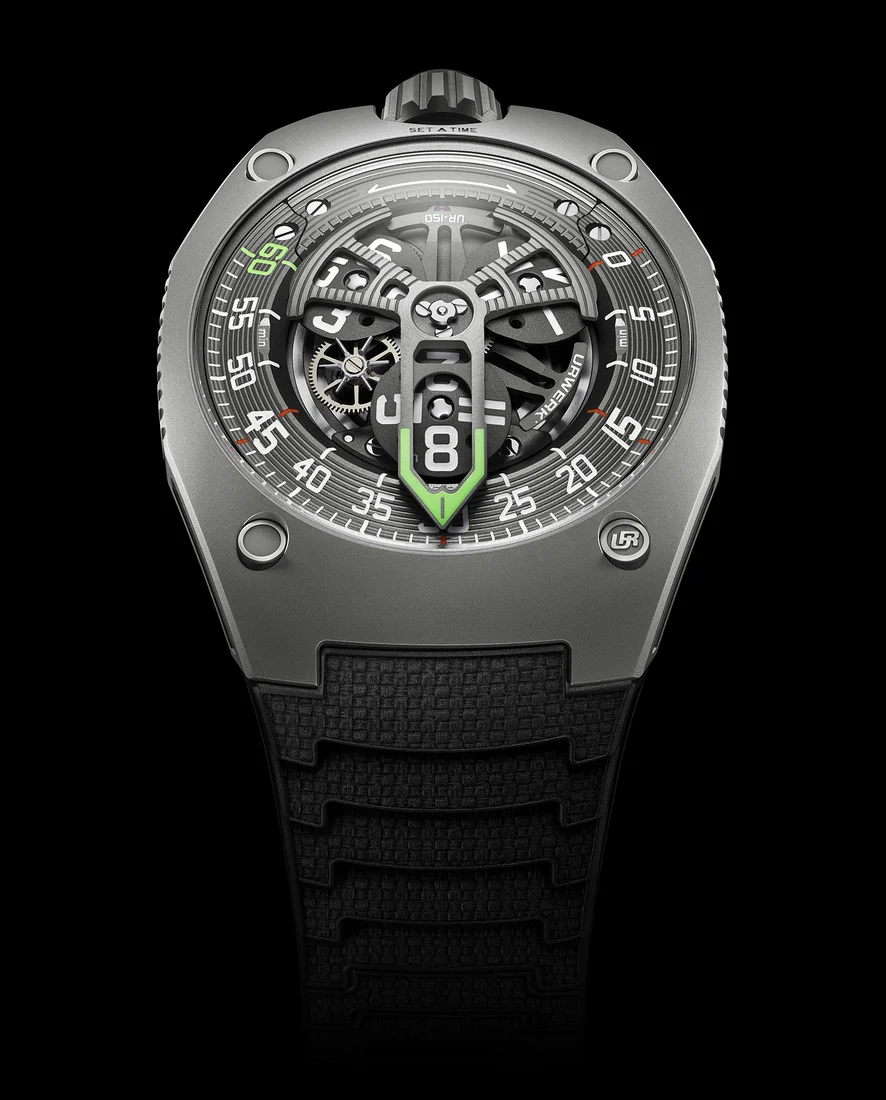
UR-150 Titan Scorpion, frontUR-150 Titan Scorpion, back

UR-Satellite · 42.5 × 52.3mm · AutomaticTap to see the back

UR-150 Titan Scorpion

About $99,000 at launch in 2024

The hours ride on three open-worked satellites, and a red-tipped minute hand sweeps almost two-thirds of the dial. At the top of the hour it jumps back 240 degrees to zero, driven by a spring and slowed by a flywheel. Urwerk made 50.

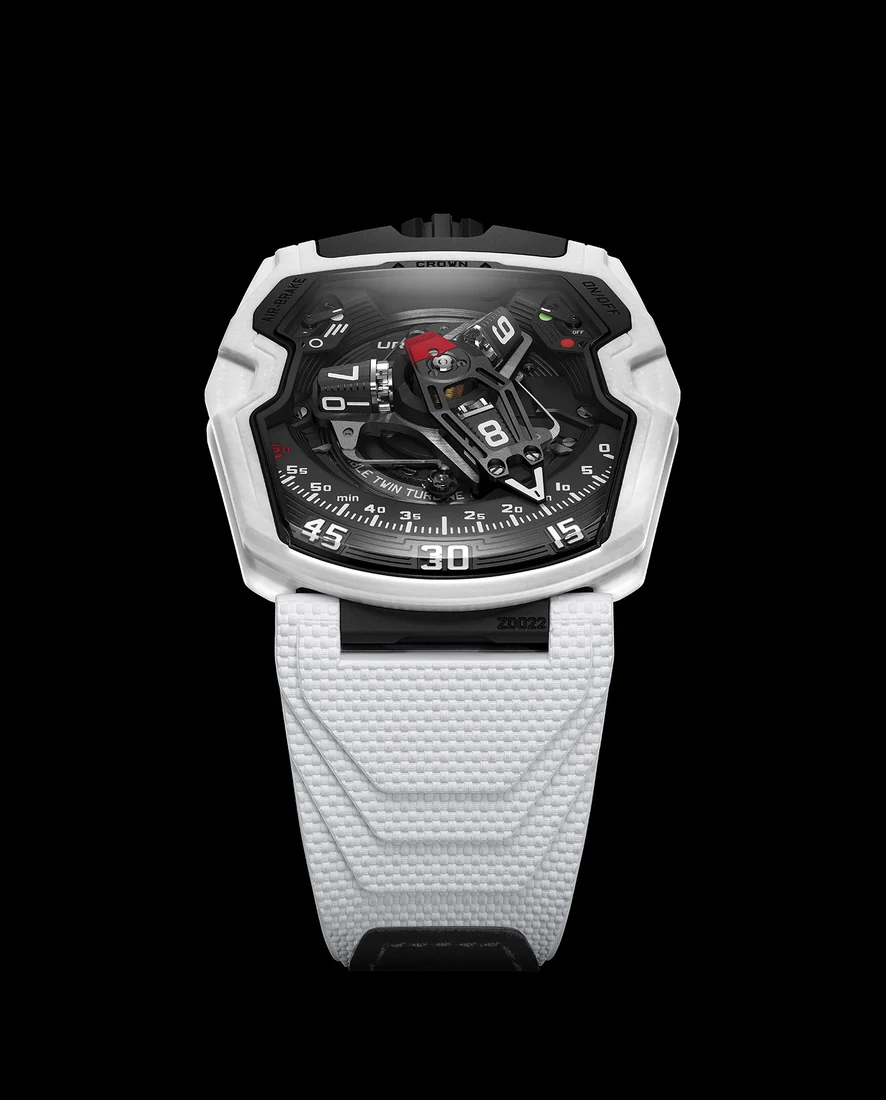
UR-230 Polaris, front

UR-Satellite · 44.8 × 53.6mm · Automatic

UR-230 Polaris

About $170,000 at launch in 2024

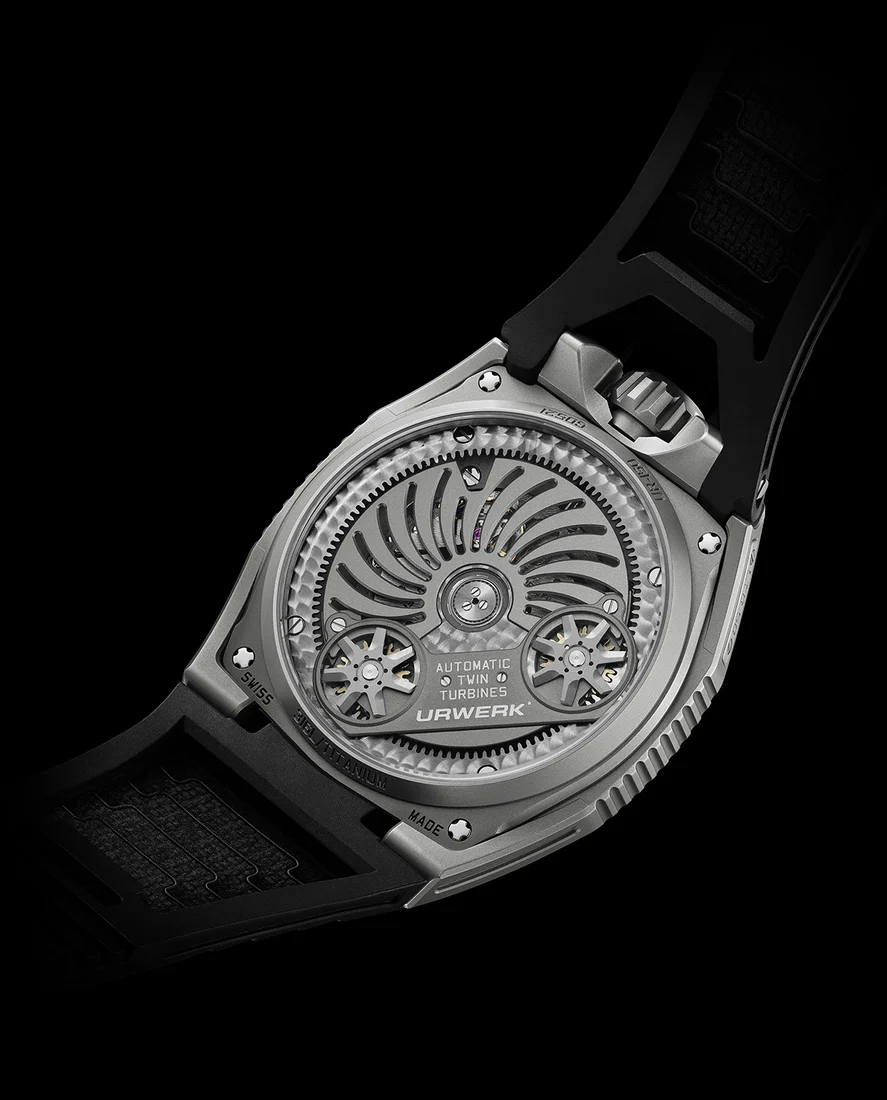
The current hour appears inside the open-worked minute hand, whose arrow points to the minutes. Turbines on the back brake the winding to suit how much you move, and a knob disengages the rotor so you can wind it by hand. Urwerk made 35 in white ceramic composite over black titanium.

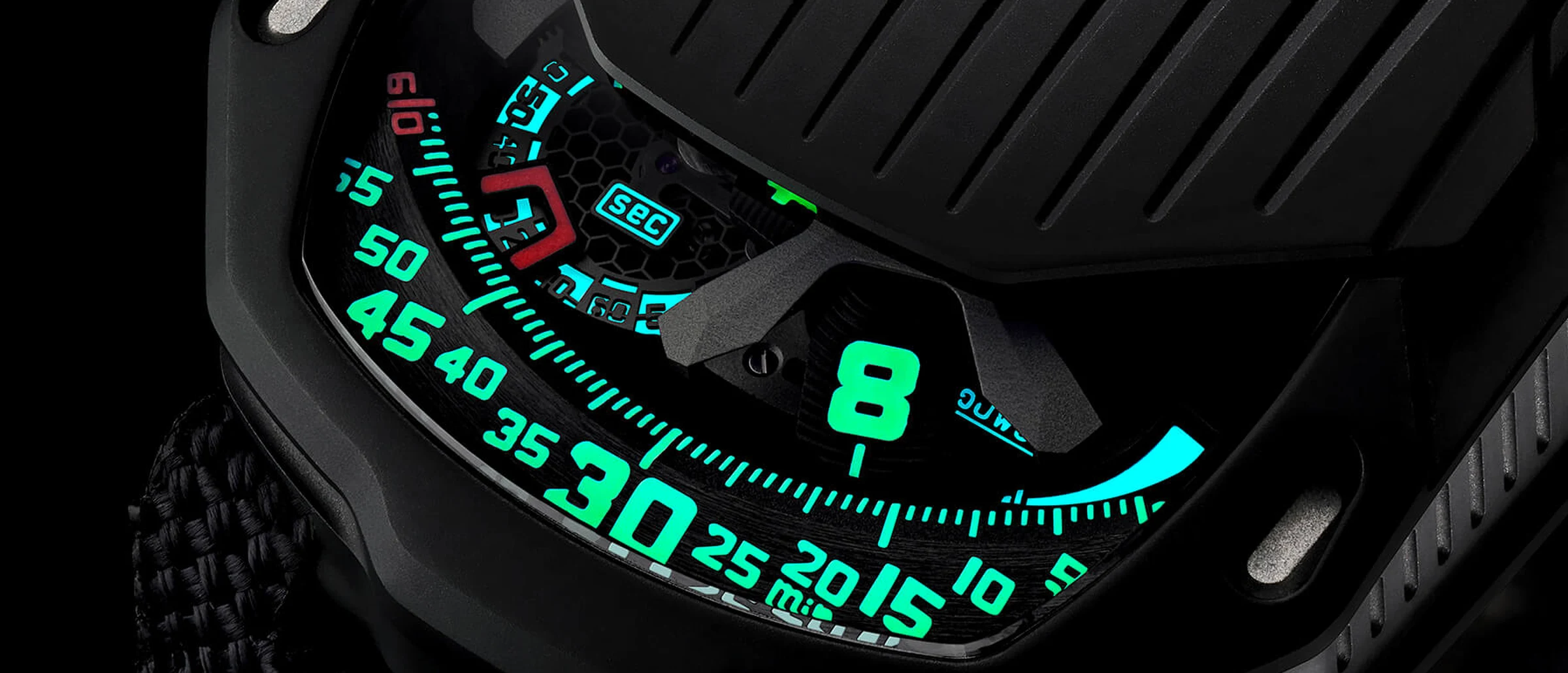
UR-105 CT Kryptonite, frontUR-105 CT Kryptonite, back

UR-Satellite · 39.5 × 53mm · AutomaticTap to see the back

UR-105 CT Kryptonite

About $73,000 at launch in 2018

Four hour satellites take turns sweeping across a 60-minute scale, so the hour numeral itself marks the minutes. A hinged cover opens to show the whole mechanism. In the dark the hours and minutes glow green, and the seconds and power reserve glow blue.

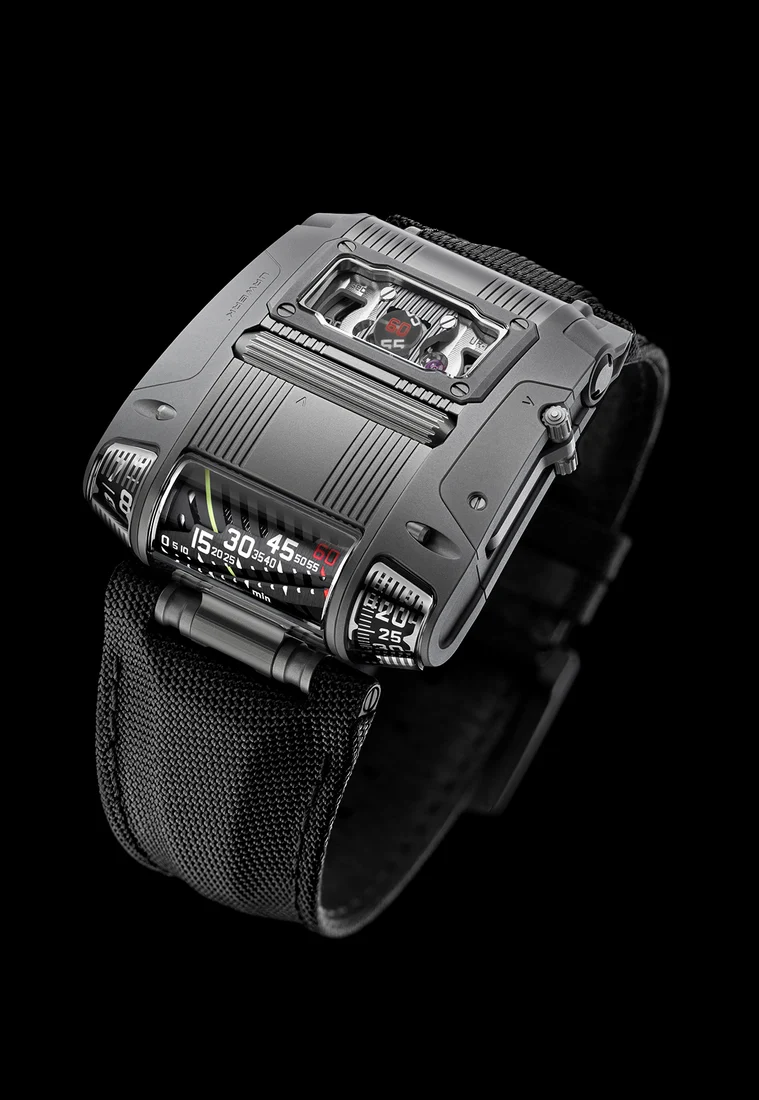
UR-111C Gunmetal, front

UR-Special Projects · 42 × 46mm · Automatic

UR-111C Gunmetal

About $147,000 at launch in 2018

It has no crown. You wind it by rolling a fluted cylinder on top of the case, and a lever on the side lets the same roller set the time. A slanted minute track crosses the front, and optical fibers show the seconds from two wheels below.

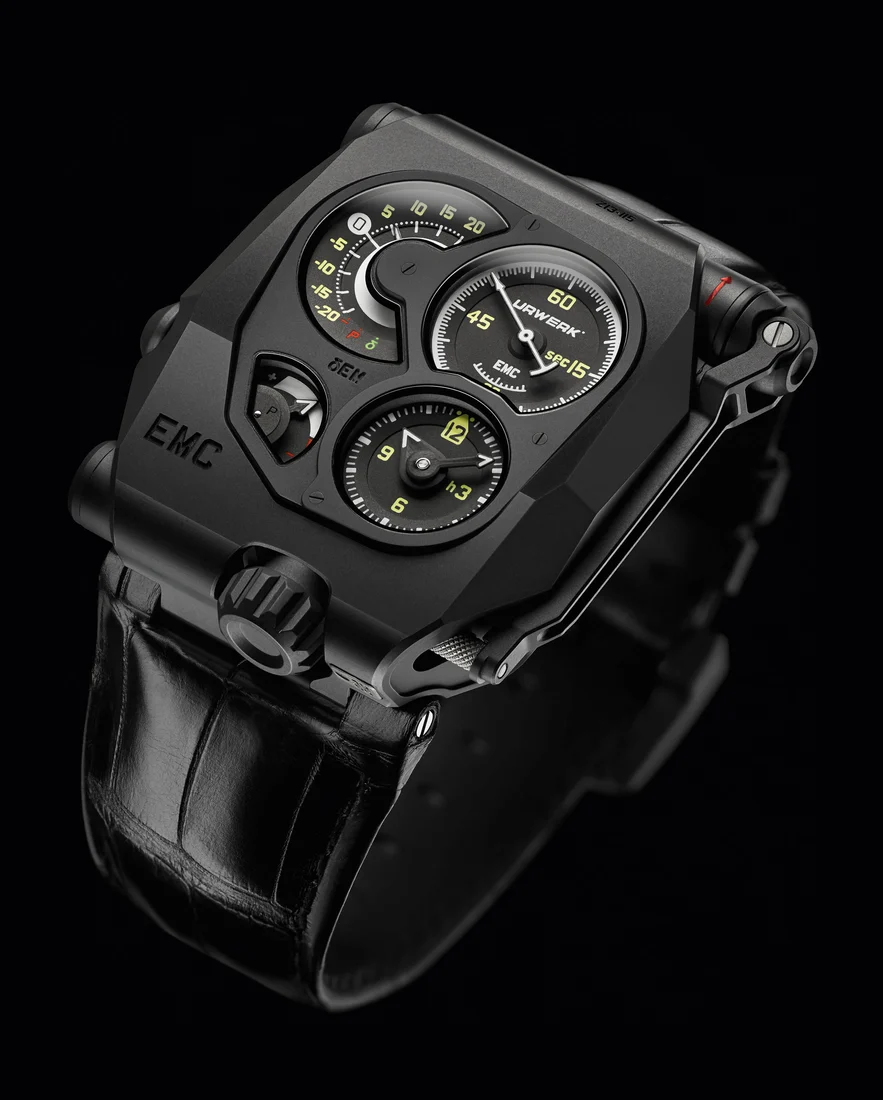
EMC Black, front

UR-Chronometry · 43 × 51mm · Manual wind

EMC Black

About $133,000 at launch in 2014

The EMC checks its own accuracy. Turn the crank in the case, and an LED and a sensor time the balance wheel against a quartz reference, then a dial shows how fast or slow the watch is. A screw on the back corrects the rate, and the watch needs no battery.

More about Urwerk

The name joins Ur, the ancient Sumerian city whose obelisks told time by their shadows, to werk, German for work. The satellite hours go back to the night clocks the Campani brothers built in the 17th century for Pope Alexander VII, who wanted a silent clock he could read in the dark. The Baumgartners’ father restored clocks like them.

Felix Baumgartner made the display work with a Maltese-cross stop-work he found while restoring a pocket watch. Urwerk showed its first watches in 1997 at the AHCI’s stand at Baselworld, and in 2005 it built the Opus V for Harry Winston, with hours on satellites that turn on two axes.